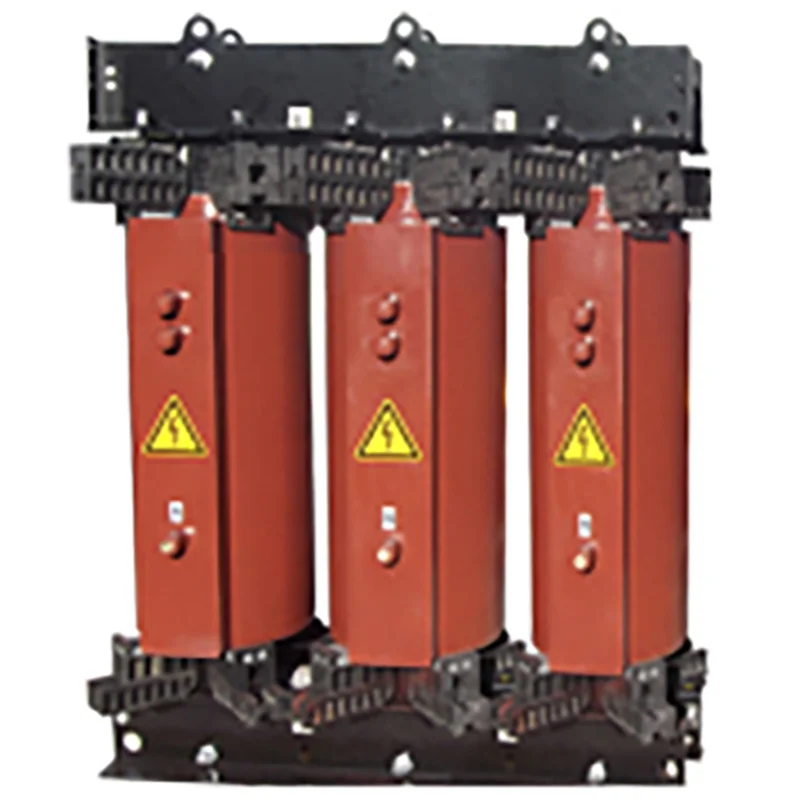
Many plants and substations operate using delta feeding systems, which have no neutral point. In case of ground faults, there is no defined pathway for the flow of fault currents, making it likely that the relay will fail to operate and the equipment will remain under stress for much too long. Grounding transformers solve this problem by generating a neutral point where it does not exist. This brochure describes all the possible designs, input information and manufacturers of grounding transformers.
We produce three types of transformers, each designed to serve a particular system purpose.
Our grounding transformers come in oil and dry type construction and each earthing transformer is sized on the basis of your protection scheme.
Good design starts with four figures.
After determining these figures, we can design grounding transformers that will run within temperature limits during a fault. The correctly rated zigzag transformer also ensures that neutral voltage shifting is controlled.
The above benefits have contributed to widespread use of grounding transformers in utilities, industries, and renewable energy power plants. The earthing transformer limits transient overvoltages.
A transformer may be only one component of a solution for earthing, which is why we also offer complete systems.
When using an NGR: The neutral grounding resistor is installed between the transformer neutral and the ground. It keeps the fault current at a safe level, ensuring that the damage is reduced and relays continue functioning.
When using an arc suppression coil: This is also known as the Petersen coil. It is configured to resonate with the capacitance of the network. Many line-to-ground faults will clear up themselves, and supply will continue.
In both cases, the earthing transformer supplies the neutral point, and the same zigzag transformer may be used for either of the configurations. Bundling all components together prevents a mismatch in rating, and our grounding transformers come fully terminated.
The grounding transformer is essential when there is a need for a reliable earthing fault return path in any delta-connected system:
In all these cases, the use of a zigzag or star-delta transformer provides the protection engineer with a defined fault path, and in renewable projects the specification of an earthing transformer is typically made in grid code studies.
Each unit is tested before dispatch in accordance with applicable IEC and local standards. Tests carried out include resistance of windings, voltage ratio, insulation resistance, and dielectric test. We also perform a zero-sequence impedance test to verify that the result is equal to the designed value and any special tests required by you, such as temperature rise or short-circuit capacity, can be done upon request. Grounding transformers have high-quality core steel and copper windings. Inspection certificates are available. For a zigzag transformer for a critical feeder, your inspector can visit our workshop.
All of these processes take place within our facility so that quality is maintained and schedules are kept clear. Since we deal with grounding transformers on a daily basis, we can quickly offer the type of earthing transformer needed and be completely honest with you if only a resistor or a coil is necessary. In addition, we also provide engineering services from enquiry through commissioning, customisation options and proper documentation.
A delta system has no neutral, so you connect a zigzag transformer or star-delta unit to the three lines. It creates an artificial neutral, which can then be tied to earth directly or through an NGR. This is the standard job of grounding transformers.
They do different jobs. The NGR limits current but needs a neutral point to connect to. If your system already has a star neutral, an NGR alone may be enough. If not, a grounding transformer provides the neutral, and the NGR is added to it.
Yes. With an auxiliary winding, the unit can feed lighting, pumps, and control supplies. The grounding transformer must then be rated for both fault duty and continuous load. An earthing transformer with this option often replaces a separate station transformer.
It depends on the design. Many units are rated for 10 or 60 seconds, since protection clears faults quickly. Continuous ratings are possible but need a larger unit. A zigzag transformer is sized in kVA for the chosen duration.
Please share the system voltage, frequency, fault current, duration, and required impedance. Also tell us whether the earthing transformer will connect to an NGR or a coil, the auxiliary load, if any, the site conditions, and the applicable standards. With these details, we can quote the right grounding transformers quickly.