Consider an aquarium on a warm day. The tanks purchased last week have not yet arrived; the water is getting low, and the fish are beginning to show signs of distress. Consider the same scenario with a machine installed in one corner of the place that separates oxygen from the surrounding air 24 hours a day. Without the need for any delivery or waiting around, this is the advantage that comes with the use of an oxygen concentrator, and why more companies are turning their backs on bottled gases.
The categorisation of our equipment is done according to the amount of oxygen per hour that our units produce; therefore, you can choose to start using our oxygen concentrators according to your needs.
Small units range from 5 to 20 Nm³/h and are suitable for hatcheries, laboratories and small cutting shops. They are quiet, skid-mounted, and easy to fit into a corner.
Medium units, ranging from 20 to 100 Nm³/h, serve glass lines, medium-sized furnaces and wastewater treatment plants.
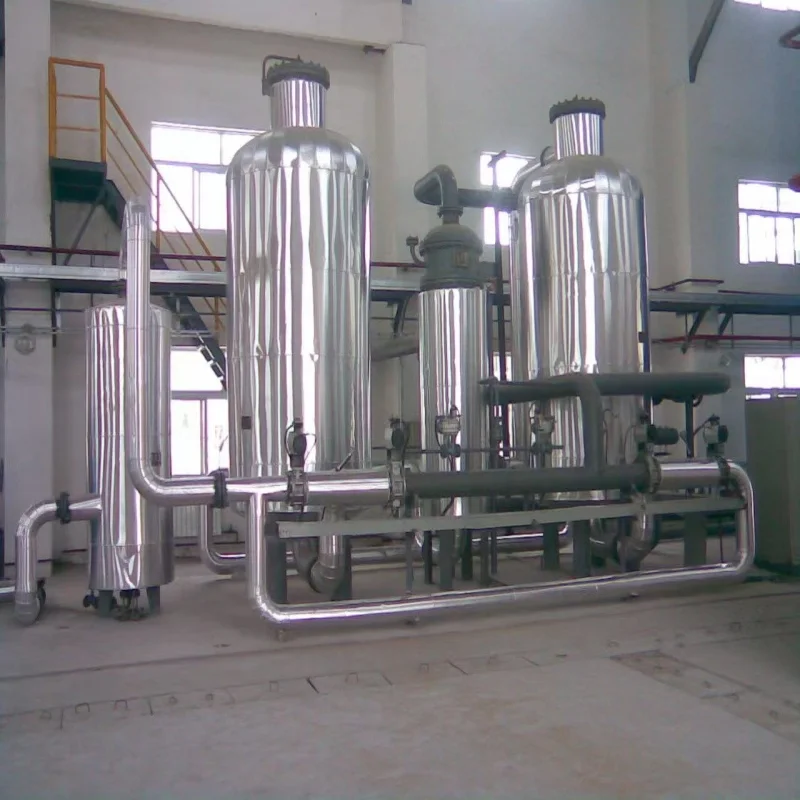
Large units, ranging from 100 to 500 Nm³/h, are manufactured as a full PSA oxygen plant, usually within a container, and are used in steelworks, chemical plants and large wastewater treatment plants.
If your demand is above 100 Nm³/h, a PSA oxygen plant is usually the better fit. Larger towers and bigger compressors keep the cost per cubic metre low while handling heavy, continuous loads.
They all have one thing in common: the compressed air goes through towers packed with zeolite, which absorbs the nitrogen while the oxygen passes and gets collected. The towers keep switching roles every few seconds, thus the constant flow of oxygen.
An oxygen generator needs only three inputs: air, electricity and a little floor space. There are no chemicals to buy and no gas to store in bulk. The machine takes what is already around you and turns it into a usable supply.
| Parameter | Typical value |
|---|---|
| Flow rate | 5 to 500 Nm³/h |
| Oxygen purity | 90% to 95%, typically 93% |
| Outlet pressure | 0.3 to 0.5 MPa, higher with a booster |
| Power use | About 0.35 to 0.45 kWh per Nm³ of oxygen |
| Dew point | -40 °C or better |
| Dimensions | Compact skid up to full container |
Think of these as average figures. Provide your process information, and we'll determine the ratings for your industrial oxygen concentrator.
Continuous generation. Oxygen generators generate gas on demand. No production stops when waiting for gas delivery trucks.
Zero handling of cylinders. There are no bulky tanks to move around or store in high-pressure conditions near people. Less moving means less risk of incidents.
Reduced operating costs. After installation, only electricity is needed to operate your equipment. At high continuous flow rates, it becomes noticeably cheaper than delivered gas.
Simple operation. A touch screen, automated start and stop functions, and alarms make operating your equipment easy.
Expansion capability. When demand increases, you can install a new skid next to the old one. Good industrial oxygen concentrators also have some expansion margin.
Making your own gas gives you control that deliveries never can. With on-site oxygen supply, you decide how much to produce and when, and your schedule no longer depends on a supplier’s truck.
Furnaces: Fuel burns more efficiently when it is enriched with oxygen, hence, increased temperature of the flame and decrease in the consumption of fuel.
Cutting: Increased oxygen improves the quality and increases the speed of oxy-fuel cutting in thick steel.
Water treatment: Oxygen provides nutrients to the microorganisms in the aeration tank and facilitates ozone production.
Aquaculture: Dissolved oxygen provides the necessary environment to support the growth of fish, especially during hot and stagnant weather.
Glass: Oxygen-enriched burners increase the efficiency of the melting process and decrease emissions. Most factories have an industrial oxygen concentrator next to their furnaces for this purpose.
You do not need a large factory to see the gains. A single oxygen generator can serve a fish farm, a welding workshop or a small laboratory, and the savings add up quickly when gas use is steady.
Once the industrial oxygen concentrator reaches your facility, be sure that you have ready:
Leave clear access around the towers, filters and control panel. A PSA oxygen plant needs space for routine checks, so avoid tucking it into a cramped corner.
Having all that ready, the oxygen production is usually operational within a few days after installation.
Minimal maintenance is required. There is a need for filter changing, annual valve checks and periodic calibration of the oxygen analyser. The zeolite beds usually last for eight to ten years when supplied with clean and dry air. This is one of the factors that make a PSA Oxygen Plant generation system reliable.
A simple service schedule keeps on-site oxygen supply running without surprises. Log filter changes, analyser checks and pressure readings, and your team will spot small drifts long before they become shutdowns.
Every system from us comes with training, spare part kits and remote monitoring; this means that even minor faults are detected early and do not lead to machine failure. This makes sure that your oxygen generating machine operates efficiently for many years to come.
As an industrial oxygen concentrator supplier, all the stages of manufacturing, assembling and testing are done by us. The needs of the client are studied first, and then the right capacity of the system is recommended and not the highest one. Every oxygen generator is tested before delivery, and we offer you drawings, a warranty and fast spare parts.
List every point that uses oxygen, add up their hourly demand, then add 15 to 20 per cent for peaks and growth. For example, burners using 30 Nm³/h and cutting stations using 10 Nm³/h total 40. Adding 20 per cent gives 48, so a 50 Nm³/h industrial oxygen concentrator fits well.
Most units deliver 90 to 95 per cent oxygen, with 93 per cent typical. The balance is mostly argon, which is normal for the technology.
Yes. An industrial oxygen concentrator is built for round-the-clock duty. Routine care means filter changes, valve checks and analyser calibration.
Expect roughly 0.35 to 0.45 kWh per Nm³ of oxygen. The compressor should deliver about four to five times the oxygen flow, and the air must be dry and oil-free.
Cylinders mean rental fees, delivery charges and handling risk. On-site oxygen supply replaces these with electricity and light upkeep. For steady daily use, most buyers recover the investment in one to three years, and an industrial oxygen concentrator also removes the risk of running out.