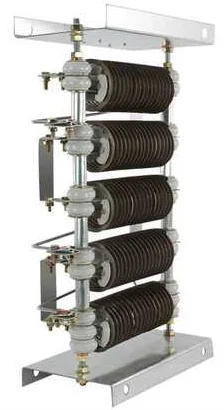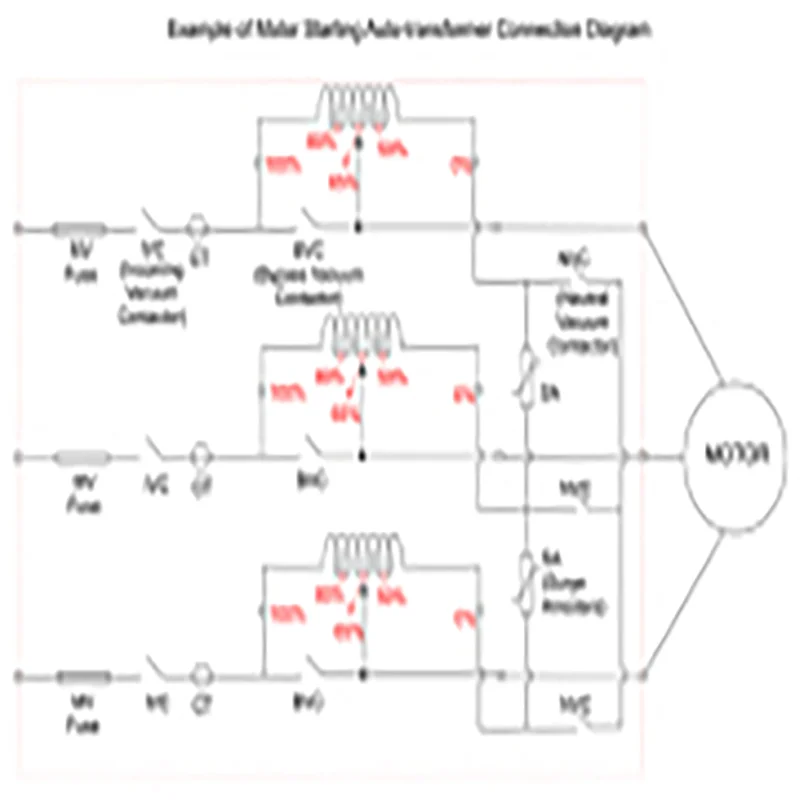
Start-up of a large motor is undoubtedly the most difficult point in the daily routine of a plant. Without any kind of control, the motor demands an enormous amount of current. The supply voltage drops and the drive train experiences a heavy shock. This Motor Starting Resistor solves the problem by applying the resistance at motor start and gradually reducing it as the motor picks up speed. We are the Baoding Weifan Electrical Technology Co., Ltd., having over 20 years experience in power equipment, and serving customers from more than 80 countries all over the world.
As a Motor Starting Resistor Manufacturer, our products are produced for slip ring and heavy-duty motors. We custom make each resistor so the number of steps, ratings and enclosures match the motor and starter you need.
The Slip Ring Motor Starting Resistor is connected to the rotor circuit using the slip rings. Initially, at start, the maximum resistance restricts the current but increases the torque. As the speed of the motor increases, the steps are bypassed to short the rotor.
The Rotor Resistor is the crucial component of this system, as it determines the amount of current and torque you will have at each step.
Each Motor Starting Resistor of this kind is made based on the information about your rotor.
In stepped resistor banks, the total resistance is divided into separate portions which are then excluded step by step using the help of either contactors or controllers. In case control versions are needed for some reason, they are available too. Each Motor Starting Resistor bank is manufactured based on the number of steps and your starter switching mode.
A Motor Starter Resistor of this kind may be offered in two forms – as an open frame bank and an enclosed one.
Motor Starting Resistor calculations begin from here. The final numbers depend on your motor nameplate and starter.
| Parameter | What we confirm |
|---|---|
| Motor kW | Rated power of the motor |
| Rotor voltage and current | Values from the rotor nameplate |
| Steps | Number of resistance steps and how they are switched |
| Duty class | Heavy or light starting duty |
| Starts per hour | How often the motor starts in normal use |
Each Rotor Resistor has to be sized according to the amount of energy that it has to absorb and not just the current that it will carry.
Every design of a Motor Starter Resistor has to comply with the above-mentioned values.
Motor Starting Resistor gives you assured protection for your motor and power supply.
Slip Ring Motor Starting Resistor can be further improved by adjusting the step values through engineering.
Rotor Resistor ensures a smooth start through all the steps.
Heavy motors are used in various demanding machines. Common applications are mills, crushers, pumps, compressors and hoists. These machines have a heavy load at starting, which is why gradual acceleration is required for motor and machine protection.
Regular banks cannot be used for each motor. The number of steps, resistors, frame, terminals, cable entrance and the case can be customised. If you need the rotor resistor fitted in a limited area, our engineers can consider it.
A good Motor Starting Resistor manufacturer adjusts its product to your starter, not vice versa.
The substitution or modernisation of the old Slip Ring Motor Starting Resistor is available. The replacement can be made based on the original drawings or nameplate information.
Each product is carefully tested after the manufacturing process, so only qualified units are delivered. The drawings and technical information are checked by our engineers prior to the start of manufacturing, and we allow you to review and approve them.
All Motor Starter Resistors are tested before shipment from the factory.
Buyers prefer to purchase the Motor Starting Resistor from the manufacturer who can prove the high quality.
If you require an efficient Motor Starting Resistor, our engineering, inspection and timely delivery will be at your disposal.
When you are searching for a Motor Starter Resistor, you are actually in search of the same thing.
Provide us with your rotor details, and we will develop the corresponding Rotor Resistor for you.
We can supply a Slip Ring Motor Starting Resistor with necessary documentation.
A large motor can draw several times its full-load current at start. Adding resistance in the rotor circuit limits the current, and stepping it out gradually keeps the voltage dip small.
It depends on the duty class, the energy absorbed in each start and the thermal mass of the resistor. Tell us your required starts per hour and start time, and we will design for that duty.
Confirm the real number of starts and the true acceleration time. Allow cooling time between starts, and keep ventilation clear. Make sure each step is cut out on time, because staying too long on early steps adds heat.
Please send the motor kW, rotor voltage and current, number of steps, duty class, starts per hour, load type, and starting torque needs.
Yes, in many cases. Send the panel drawings, existing resistor data, photos and key dimensions. We will check the fit, connections and step arrangement, then propose a matching design for your approval.