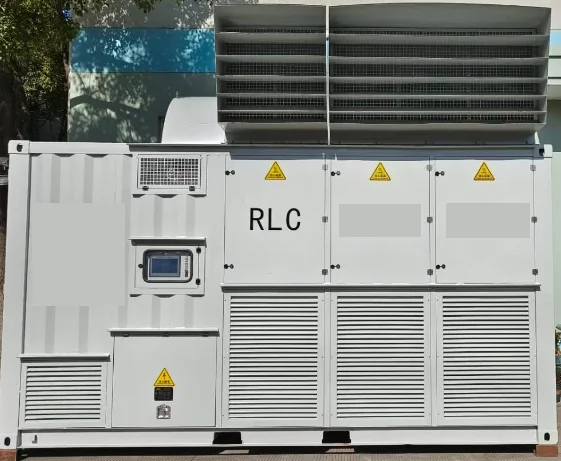
A standby generator that hasn’t been used for many months can start on its first attempt and still fail when the load comes. Generators that operate at a low load gather unspent fuel and problems like poor cooling and loose connections go unnoticed until the unit is stressed. The solution is to test the unit using a load that is under your control before relying on the set. We manufacture load bank resistors. This document describes our products, information needed, and selection process.
Our product line has three variants, each suitable for a certain testing regime.
Fixed units are installed in a plant room floor or an outdoor pad, and wired up permanently to the power supply. Hospitals, data centres, and factories employ fixed resistive load banks for monthly testing, as the fixed resistive load bank is always at hand.
Portable units come in a wheeled cart or trailer so that one team can take care of multiple facilities. Portable generator load banks are the standard option for rental companies and maintenance crews.
Air-cooled units force the air through resistor elements with the help of fans, so no water connection is required. Every load bank resistor shipped by us features stainless steel or nichrome elements enclosed in a ventilated, powder-coated housing. In any case, a good load bank resistor manufacturer should specify the type and rating of elements.
There are five points determining the right unit, so save this table whenever sending an enquiry.
| Parameter | What it tells you |
|---|---|
| kW | The total power absorbed, matched to your generator rating |
| Voltage | The supply level, such as 230 V or 415 V |
| Load steps | How finely you can adjust the load, for example 5 kW or 25 kW per step |
| Cooling | Air-cooled for most uses, water-cooled for compact, high-power tests |
| Duty time | Continuous running or short-time ratings with rest periods |
In a resistive load bank, the power conversion is done with unity power factor, meaning that the kW you dial is the kW that your engine should generate. Should there be a need for a lagging power factor, please let us know in advance, as we can incorporate reactive sections. Generator load banks are always sized with some allowance to ensure they never operate at their capacity limits. An experienced load bank resistor manufacturer will request all five parameters.
This time, simplicity becomes the key advantage of load bank resistors. A well-designed load bank resistor has a small number of components, which is guaranteed by a good load bank resistor manufacturer.
Generators. Operating a load bank on a generator at 70% to 100% load removes carbon build-ups and demonstrates that the machine can handle its rated load.
UPS Systems. A resistive load bank provides a constant load to test battery life and transfer characteristics.
Switchgear. Current flow via bus bars and circuit breakers will show you any hot connections and loose lugs, while a load bank resistor creates the heat needed.
Factory Acceptance Tests. Many purchasers require a load bank to conduct full-load testing before delivery. A load bank resistor manufacturer familiar with testing will save you time.
Each site is different, and that is why we modify our designs accordingly. You have a choice of:
As a load bank resistor manufacturer, we can integrate power meters, logging systems, and emergency stop devices. Your customised resistive load bank will allow you to perform tests without any hacks and your customised generator load bank will include both resistive and reactive loads.
Each unit undergoes pre-delivery inspection. The element resistance is measured, insulation resistance is tested, and a dielectric withstand test is performed on the wiring. The heat run makes sure that the unit delivers its rated power with fans operational, and that the thermal protection triggers at the preset point. The design of a load bank resistor for each installation complies with IEC and national requirements. A witnessed test of a load bank resistor at your critical facility is available from a professional load bank resistor manufacturer.
All manufacturing operations, from design to assembly and testing, take place at one plant, guaranteeing a reliable delivery schedule and quality. As a load bank resistor manufacturer, we give sound recommendations, including when a smaller unit will do. The best load bank resistor manufacturer also provides you with support after the sale; elements, fans, and advice are available from us. Our load bank resistor designs incorporate the necessary thermal safety margin. Let us know your generator rating and test program, and you will receive a sensible quotation.
Only a full-load test will tell you. Connect a generator load bank sized to the set’s kW rating, raise the load in steps, and watch voltage, frequency, and temperature. Any load bank resistor manufacturer can size it from your nameplate.
Commissioning usually moves through 25, 50, 75, and 100 per cent, with a short hold at each level. A resistive load bank with both large and small steps covers this, and our load bank resistor manufacturer team can propose a layout.
That depends on the duty rating. Many air-cooled units run continuously at full power if airflow is clear and ambient temperature stays within limits. Ask the load bank resistor manufacturer to confirm duty time in writing.
Air-cooled is the simple choice when you have open space, since it needs no water. Water-cooled suits compact, high-power tests. For most sets, a portable generator load bank with air cooling is enough. Your load bank resistor manufacturer can confirm whether water cooling is justified, and every load bank resistor we build is rated for its cooling method.
Please share the generator kVA and kW, voltage, frequency, phase, and the load steps you want. Add your power factor needs, indoor or outdoor use, duty time, and fixed or portable preference. With this, a load bank resistor manufacturer can quote the right resistive load bank and generator load bank quickly.