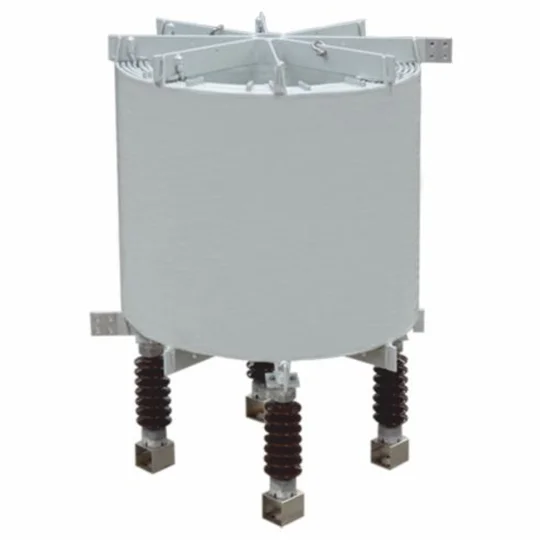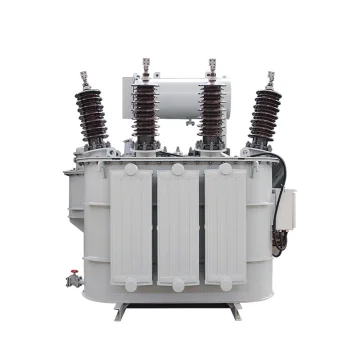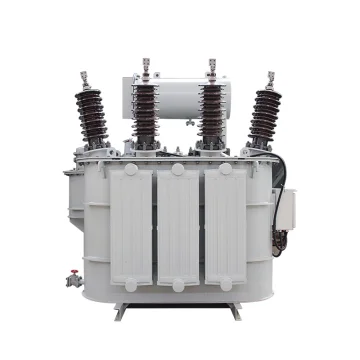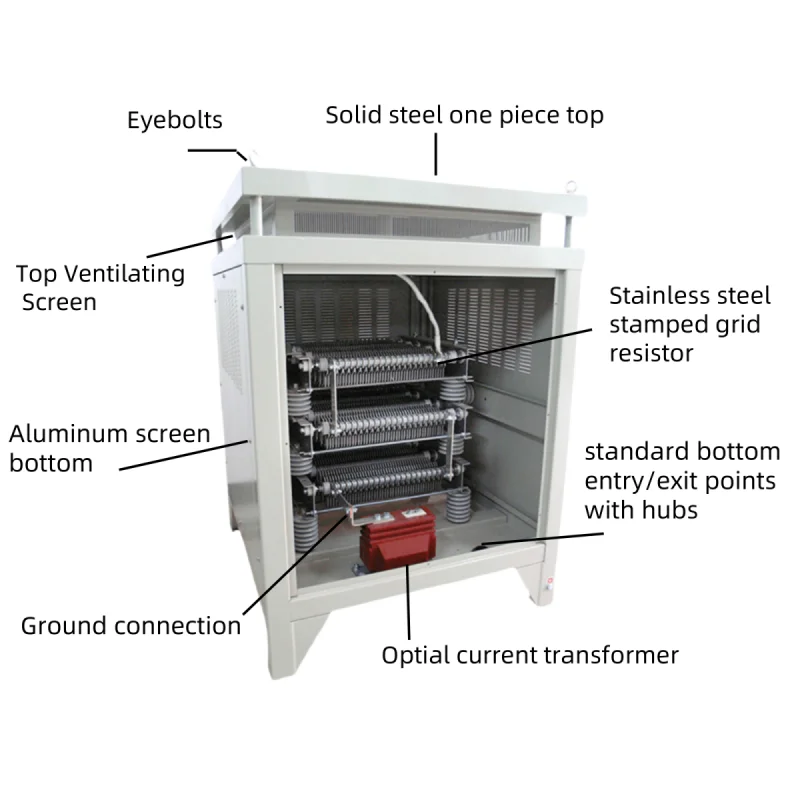
Ground faults are very common in medium-voltage networks. If uncontrolled, the fault current can be large enough to damage equipment, and the voltage in the healthy phase can rise. The Neutral Grounding Resistor exists between the neutral point of the system and earth and restricts the current to an acceptable level. We are Weifan Electrical Technology Co., Ltd., having 20 years’ experience in power equipment and our products exported to more than 80 countries.
The range includes low- and high-resistance types, as well as the whole cabinet solution. Each of our units is manufactured according to the customer's requirements for system voltage, fault current and site.
The low resistance type permits a greater magnitude of ground fault current so that protection relays can detect the fault and open the faulty feeder. This type is used for those cases where fault clearance speed is more important than system operation continuity. The value of the resistor depends on the current that is needed to pass through it. A good NGR should resist the heat of the fault current too.
The high resistance design confines the earth fault current to a very low level. This makes it easy for minimal damage to occur and allows for continuation of a process through a first fault while the problem is being found. It is normally used in industrial facilities where downtime is expensive. Most engineers opt for a Neutral Earthing Resistor of this type along with alarm protection.
A high-resistance neutral grounding resistor is normally fitted with a monitoring relay.
Our NGR Cabinet combines resistor, enclosure, and terminals into one plug-and-play unit. This makes it easier to install and helps ensure neat cable entry, clearance and earthing arrangement. The NGR Cabinet can be equipped with monitoring equipment to monitor the state of the resistor and neutral circuit.
Buyers who ask for a Neutral Grounding Resistor with monitoring get early detection of faults with the resistor itself.
In most projects, the NGR Cabinet is preferred when space is limited and on-site installation time should be kept to a minimum.
All Neutral Grounding Resistor configurations begin with these parameters. The actual values depend on your system data.
| Parameter | What we confirm |
|---|---|
| System voltage | Line-to-line voltage and neutral insulation level |
| Fault current | The ground fault current you want to allow |
| Time rating | How long the resistor must carry fault current |
| Resistance | Value calculated from voltage and allowed current |
| Element material | Alloy chosen for heat and environment |
| IP rating | Enclosure protection suited to the site |
Each Neutral Earthing Resistor is rated for the worst case, not the average case.
A well-designed Neutral Grounding Resistor should do nothing for many years and then perform perfectly during the day of a fault.
In each case, the Neutral Earthing Resistor is selected according to system information, not according to any catalogue estimation.
All applications are covered by our Neutral Grounding Resistor designs.
To help size the NGR properly, your system voltage, neutral point configuration, maximum allowable ground fault current, rating, installation location and any applicable standard are needed. With single-line drawings and relay settings, we will verify your design against your protection system. If you have a system without an accessible neutral, let us know, as a grounding transformer might be required.
A Neutral Grounding Resistor can also be customised by sizing, terminal configuration, enclosure and cabling.
An NGR for a generator is different from an NGR for a utility system, so please specify your application.
Before shipment, we conduct a strict quality test for all manufactured products; only the qualified products are shipped. Our engineers examine the drawings and technical data before production and provide the relevant documentation for your examination and approval. In case of export orders, our logistics department will arrange international transportation, customs clearance and warehousing.
All NGR cabinets are tested before shipment from our factory.
Customers would prefer a Neutral Grounding Resistor manufacturer who provides quality assurances both on paper and on the production site.
Specialising in power equipment for over 20 years and supplying to more than 80 countries, our engineers will provide prompt assistance and help you verify the technical parameters prior to the manufacturing process.
If you want to ensure that your Neutral Grounding Resistor is dependable, we can offer you engineering, inspection, and delivery services for your project.
It may be referred to as the Neutral Earthing Resistor, but the task of the engineering is to design a safe, controlled fault current.
Do you want a whole package? NGR Cabinet combines everything.
Start with your protection scheme. Decide whether the system must trip fast or keep running during a first fault. Then consider system voltage, relay sensitivity and the damage level your equipment can tolerate.
The system becomes effectively ungrounded. A ground fault can then cause high transient overvoltages, and protection may not see the expected fault current.
Match it to the time your protection needs to clear a fault, then add a safety margin. Common choices include short-time ratings such as 10 seconds, longer ratings, or continuous duty when the system must run through a fault.
Monitoring is strongly recommended for high resistance systems and critical sites. It can detect an open or damaged resistor, neutral current, neutral voltage and overheating.
Yes. We supply both items, and our engineers coordinate the ratings so they work together. This is especially useful for systems without an accessible neutral, where a grounding transformer creates the neutral point.