10 Nov, 2026
Dry type units are built with air and solid insulation rather than mineral oil. That makes them a good match for indoor buildings and any site where fire safety is the top concern. An oil-immersed unit is usually the better option for very high capacities and outdoor substations, where its cooling performance and lower cost per kVA carry the most weight. The right decision depends on where the unit will sit, how much power it must carry, and how much routine maintenance your team can realistically handle.
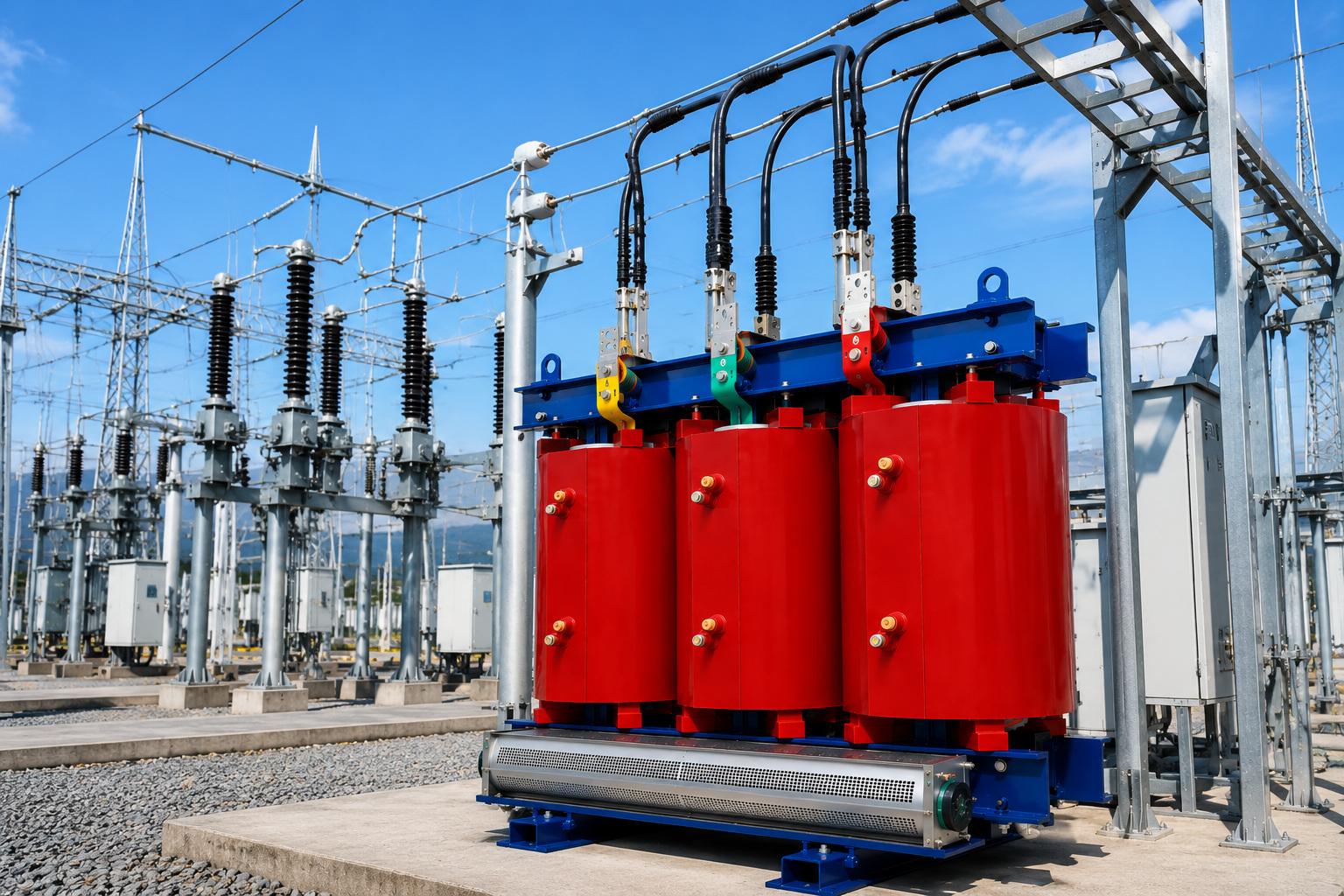
Inside a Dry Type Transformer, the core and windings are not submerged in any liquid. In cast resin designs, the windings are encased in epoxy resin reinforced with a glass fiber grid. The resin seals the coils against moisture, dust and contamination, which is why these units perform well in damp or dirty environments. WEIFAN GROUP’s SC(B)10 series is built to the IEC726, GB6450 and GB/T10228 standards. During manufacturing, a flow control pump feeds the resin so the mixture fully penetrates the gaps between turns and segments. This careful process keeps partial discharge at 5 pC or below, which supports long insulation life.
Heat leaves the unit through the surrounding air rather than through oil. Natural convection or forced fans move air across the coils, so the transformer depends on proper airflow around it. Good spacing and clean ventilation keep the unit cool, quiet and stable. WEIFAN offers thermal classes F and H, which give designers more room when the site runs at higher operating temperatures. Checking that air paths stay unobstructed helps the cooling system do its job for many years.
The table below compares the two designs on the factors that matter most during selection.
| Factor | Dry Type | Oil-Immersed |
| Cooling | Air, natural or forced | Oil circulating through radiators or fans |
| Fire risk | Low, with flame-resistant resin | Higher, needs containment and fire barriers |
| Maintenance | Mainly cleaning and periodic inspection | Regular oil sampling and testing |
| Location | Indoor or outdoor, suited to buildings | Mostly outdoor or dedicated vaults |
| Capacity | WEIFAN range from 25 kVA up to 4 MVA | Suited to larger ratings |
Oil-immersed units often cost less per kVA and handle heavy overloads in large substations, so they remain a common choice for major utility projects. A Dry Type Transformer trades some of that advantage for safety, cleanliness and simpler upkeep. Neither design is better in every situation. The best option is the one that fits your site, budget and safety requirements.
Dry type designs fit places where people, fire safety and clean surroundings matter as much as electrical performance.
Hospitals, shopping centers, residential communities and high-occupancy buildings often need a transformer close to the loads it serves. A Dry Type Transformer can sit in a basement or electrical room without a separate oil containment pit or fire barrier. WEIFAN units also suit hotels, airports and rail stations, where loads are steady with occasional peaks and building managers want quiet operation.
Industrial plants and enclosed work areas need equipment that will not leak or add fire hazards. Chemical plants, for example, benefit from the damp-proof and anti-fouling design, which holds up against the moisture and dust common in those settings. Because a cast resin unit carries no oil, it works well as an Industrial Power Transformer in spaces where an oil-filled unit would need extra safeguards and more frequent inspection.
Choosing the correct unit starts with a clear picture of your electrical demand and site conditions. A reliable Transformer Equipment Supplier will ask for these details before recommending a model, and the points below cover the most important ones.
Start with the load you expect today and the load you plan to add over the next several years. WEIFAN dry type cast resin transformers cover rated voltages from 11 kV up to 36 kV and power ratings from 25 kVA up to 4 MVA. Matching the rating to real demand avoids both overloading and wasted capacity. Ask your supplier to confirm the voltage ratio and tap settings so the unit connects correctly to your existing network.
Check the altitude, ambient temperature and humidity of the site before choosing a model. The standard design assumes indoor installation below 1000 meters, a maximum ambient temperature of 40 degrees Celsius and a minimum of minus 5 degrees Celsius. Dusty or humid locations benefit from the sealed resin construction, and every installation needs enough open space for air to circulate freely.
Consider whether the load is steady or has frequent peaks, such as motors, compressors or heavy production equipment. A demanding Industrial Power Transformer application may need extra margin for starting currents and short overloads. Leave room for growth, because replacing a transformer later costs far more than specifying some spare capacity from the start.
Can a Dry Type Transformer be installed indoors without extra fire protection?
Yes. The cast resin design is flame resistant and contains no oil, which is why it is widely used inside buildings. Local codes still set clearance, ventilation and access rules, so confirm them with your engineer before installation.
What ventilation does it need?
Leave enough clear space around the unit so air can reach the coils and carry heat out of the room. Follow the manufacturer’s clearance figures during installation, and check that warm air has a way out. When airflow is restricted, the unit runs hotter, and that wears down its insulation faster.
Does it need less maintenance than an oil-filled one?
Generally, yes. In most cases. Without oil, there is nothing to sample, filter or replace. Routine care is mostly cleaning, checking that connections stay tight, and looking for signs of heat or dust buildup.Oil-filled units need regular oil testing and occasional treatment, which adds ongoing cost and planning.
What information should I send a supplier to get the right quote?
To get an accurate quote, send your supplier the rated voltage, the capacity in kVA or MVA, the number of phases, the site altitude and temperature, and whether the unit goes indoors or outdoors. Include any protection or accessory requirements too. If you can also share the expected load profile and plans for future expansion, the supplier can recommend a model that will last. Complete details lead to a quote you can rely on.