10 Nov, 2026
A large motor can draw several times its rated current the moment it starts, and that surge can pull down voltage across the whole plant. A Motor Starting Resistor or a starting reactor limits this inrush by lowering the voltage applied to the motor during start-up. This guide compares the two methods, explains how each one works, and offers practical points for choosing the right option for your site.
Connecting a large motor directly to the line is simple, but it creates problems that build up over time. The motor pulls a heavy current before it reaches speed, and the equipment feeding it has to handle that surge every time it starts. Reduced-voltage starting spreads that stress out and keeps the rest of the system stable.
At start-up, the motor behaves almost like a short circuit until its rotor begins turning. The resulting inrush can cause voltage dips that affect lighting, control circuits and other running equipment on the same network. A Motor Starting Resistor reduces that dip by limiting the current drawn from the supply during the first moments of starting.
Direct-online starting produces voltage flicker and a sudden jolt of torque, which strains shafts, couplings, belts and gearboxes. A gradual ramp-up gives the drive train a smoother start. Plants that run crushers, conveyors or mills often use reduced-voltage starting to protect expensive machinery from repeated shocks.
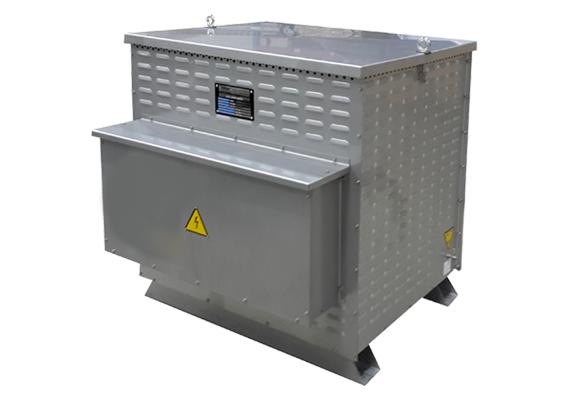
A starting resistor is connected in series with the motor during start-up. As the motor accelerates, the resistance is cut out in steps until the motor runs on full line voltage. Starting resistors work with switch-starters or contactors to control the starting and speed of AC slipring motors and DC motors. The step sequence is set so the motor accelerates smoothly without drawing excessive current at any stage.
Starting resistors remain widely used in heavy industries such as iron and steel mills, cement plants and mines. Those sites often run equipment under harsh conditions, including heavy vibration, very high ambient temperatures, dust and humidity. WEIFAN’s motor resistor units are designed for these environments, where electronic drive systems can struggle to keep up. Their rugged construction makes them a dependable choice when conditions are demanding.
A starting reactor is an inductor wired in series between the supply and the motor. During start-up it adds impedance, which holds the current down. Once the motor reaches speed, the reactor is bypassed or taken out of circuit. MV Motor Starting Reactors are a good fit for large medium-voltage drives where a fixed reduction in starting current is acceptable. Since the impedance is set at the factory, the voltage at the motor terminals falls by a known amount for the whole start.
Both methods reduce starting current, but they behave differently under load. The table below summarizes the main differences.
| Factor | Motor Starting Resistor | MV Motor Starting Reactors |
| Typical motors | Slipring and DC motors | Large medium-voltage motors |
| Starting torque | Rises as resistance steps out | Reduced in proportion to motor terminal voltage |
| Power loss | Energy turns into heat in the resistor elements | Lower resistive losses |
| Typical use | Mills, cement plants and mines | Fixed reduced-voltage starting on MV drives |
A resistor-based starter gives you control over how the motor accelerates, since the steps can be tuned to the load. A reactor offers a simpler, fixed setting with fewer control stages. Autotransformer starters, which WEIFAN also supplies, offer taps at 50, 65 and 80 percent of rated voltage. Starting torque falls with the square of the terminal voltage, so a 50 percent tap leaves about a quarter of full-voltage torque. Choose the method that gives your load enough torque while keeping inrush within your supply’s limits.
Selection starts with the motor, the supply and the load. Work through the three factors below before choosing a Motor Starting Resistor or a reactor.
Match the starter to the motor’s rated power, voltage and type. Slipring and DC motors are commonly paired with starting resistors, while large MV motors often use reactors or autotransformers. Confirm the supply voltage and the motor nameplate data before sizing any equipment.
Check how much inrush current your supply can tolerate and how much torque the load needs to get moving. A reactor or resistor lowers current, but it also lowers torque, so the load must still accelerate fully. Loads that start under heavy resistance, such as loaded crushers, need more torque margin than a fan or pump.
Motors that start many times a day put more heat into resistive elements, so duty cycle matters. Starting resistors are rated for how long they can carry starting current, and frequent starts shorten that margin. Confirm the rating against your daily starting schedule before placing an order.
Why does the voltage in my plant drop when a large motor starts?
A large motor draws a heavy current in the first moments of starting, and that current flows through the supply cables and transformers. The resulting voltage drop reaches other equipment on the same network. Reduced-voltage starting limits that current so the dip stays within acceptable limits.
Will reduced-voltage starting stop my motor from starting under load?
Not if the starter is sized correctly. Reduced voltage lowers torque, so a heavily loaded machine needs extra margin. Share the load characteristics with your supplier so they can confirm that the chosen method will accelerate the machine fully.
How often can a motor be started with a starting resistor?
The number of allowable starts depends on the resistor rating, the duty cycle and the cooling conditions. Frequent starts add heat to the elements, and too many starts in a short period can overheat them. Check the rating against your operating schedule before setting up the starter.
Can I replace my existing starter with a reactor?
It is possible, but it is not a simple swap. A reactor changes both the starting torque and the voltage the motor sees, so the control logic and protection settings will likely need to be adjusted. Swapping one in is not a simple plug-and-play job. A WEIFAN engineer can look at your motor data and existing equipment and tell you whether a reactor is the right fit for your application.