10 Nov, 2026
A neutral grounding resistor is a device connected between the neutral point of a transformer or generator and ground. Its job is to limit ground-fault current to a safe level when a phase conductor touches earth. Without one, a single fault can produce current high enough to damage windings, cables and switchgear, or so little current that protection never trips. Engineers install a neutral grounding resistor when they need a controlled and predictable fault path. This guide explains how the device works, how it compares with other neutral arrangements, and how to select one. It also belongs to the wider family of neutral earthing equipment, which includes arc suppression coils and grounding transformers.
The resistor sits between the neutral point and ground. When an earth fault occurs, the added resistance raises the total fault loop impedance, so the fault current drops to a level the equipment can withstand. That level has to be a balance. It must be low enough to protect the machine or transformer, yet high enough for earth fault relays to sense the fault and act on it. If the resistance is set too high, the current may be too small to trip protection, and the fault can persist without anyone noticing.
Fault current is the main concern in most medium-voltage networks. A resistor with the right value keeps that current within the thermal and mechanical limits of nearby equipment. This protects generator windings, transformer windings and cable sheaths from damage that would otherwise build up with every fault.
In a three-phase star system, each phase has capacitance to ground. During an earth fault, these capacitances can charge toward line voltage and create transient overvoltages. A properly sized resistor allows enough let-through current for those capacitances to discharge, which reduces stress on insulation. The resistor also lowers step voltage, the voltage difference a person could feel across the ground near a fault.
There are three common ways to treat a system neutral, and each one behaves differently during a fault. A solidly grounded neutral connects the neutral directly to earth. Fault current is very high, which makes faults easy to detect, but the equipment takes a heavy beating. An ungrounded neutral has no intentional connection to earth. Fault current is small, so the system can keep running through a single fault, but overvoltages and fault location become difficult problems.
A resistance-grounded neutral sits between these two extremes. The neutral grounding resistor limits fault current to a value chosen by the engineer, so protection operates reliably without the severe stress of a solid ground. For most industrial and utility networks that need dependable protection and controlled equipment stress, resistance grounding is the practical middle option. This method is one of several forms of neutral earthing equipment used across utility and industrial networks.
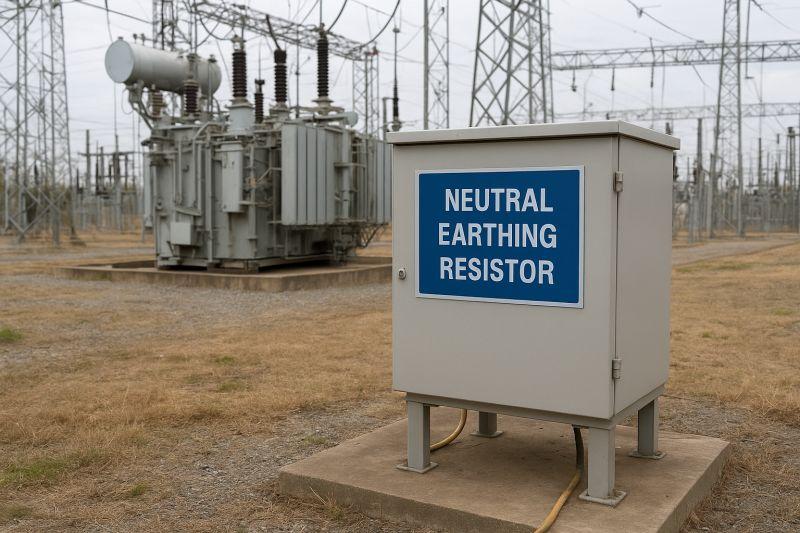
Neutral grounding resistors are installed wherever a power system needs controlled fault current at its neutral point. The most common locations are transformer neutrals and generator neutrals in medium-voltage networks. Each location has its own protection needs, so the neutral grounding resistor is sized for that specific point.
Medium-voltage distribution and industrial transformers often use a resistor on the neutral point. The resistor keeps earth faults manageable and gives protection relays a clear signal to work with. The rated time of the resistor has to match the protection design, so the resistor and relay settings are usually specified together. Such arrangements are often part of a wider package of neutral earthing equipment.
Generators are sensitive to earth faults in their stator windings. Generator neutral grounding equipment, including resistors mounted in generator neutral cubicles, limits the fault current that can flow through the machine. This protects the generator from thermal and mechanical damage and helps the protection scheme isolate the fault quickly. Many installations also add voltage transformers and protection relays to the same cubicle so the whole arrangement works as one unit.
Selection starts with system data: voltage, equipment ratings, network capacitance and the protection philosophy the site uses, including whether the resistor serves a transformer or generator neutral grounding equipment. Weifan Electric provides technical assistance against each customer’s specifications and site conditions, but the core decisions are the same on every project.
The resistor must be rated for the line-to-neutral voltage of the system it protects. Choosing a voltage class that is too low risks insulation failure, while an oversized rating adds cost without benefit.
Engineers pick the current that will flow during a fault. The target should be high enough for earth fault relays to detect, and low enough for the generator or transformer to tolerate. The resistance value is calculated from that target current, so this step drives most of the rest of the design.
Resistors are rated by how long they can carry fault current. Short-time ratings, typically 5 to 10 seconds, suit systems where faults are cleared quickly by protection. Extended-time or continuous ratings are used where reliability is critical and operators must keep the plant running until a scheduled shutdown. Petroleum plants and mines are common examples. In those cases, the system raises an alarm on the first earth fault and continues to operate.
Weifan NGRs can be installed indoors or outdoors. Most units use IP23 protection, which allows the resistor elements to cool more easily. Because the elements are made of stainless steel, the units handle harsh conditions, including coastal and desert sites. Enclosures can be stainless steel or aluminium, and elevated support stands give clearance from the ground. For hazardous or extreme locations, Ex-proof and ATEX certified versions are available. Porcelain bushings can be mounted on the top or side of the enclosure, and the unit can include voltage transformers, protection relays or grounding transformer connections when the project needs them.
What happens to a generator if the neutral is left ungrounded?
With an ungrounded neutral, an earth fault produces very little current, so the fault may go undetected. The system can keep running, but the healthy phases can rise toward line voltage, which stresses insulation. A second fault on another phase can then cause serious damage. This is why most generator installations rely on generator neutral grounding equipment to set the neutral point.
How do I decide how much fault current to allow through the NGR?
Balance two needs. The current must be large enough for relays to detect the fault reliably, and small enough that the generator or transformer will not be damaged. Equipment limits and the planned relay settings guide the choice. Weifan supplies recommended relay settings with each NGR, which helps keep the protection scheme and the resistor working together.
How do I know when an NGR needs inspection or replacement?
Look for signs of overheating, corrosion, loose connections or damaged bushings. Check resistance values and relay indications after any earth fault, and follow the maintenance guidelines supplied with the unit. A resistor that has drifted from its design value or shows physical damage should be inspected and replaced if needed.
Can one NGR be used for both a transformer and a generator?
Each neutral point is usually designed on its own, because the fault current, rated time and protection settings depend on the equipment connected to it. Sharing one resistor between a transformer and a generator is only considered after a detailed engineering review of the system.